Reducing Waiting Lists in Mental Health Services
Understand where demand is building and how to reduce backlogs sustainably.
Mental health services were facing sustained demand growth, with waiting lists increasing and limited visibility of where delays occurred.
Discuss This Use CaseThe Scenario
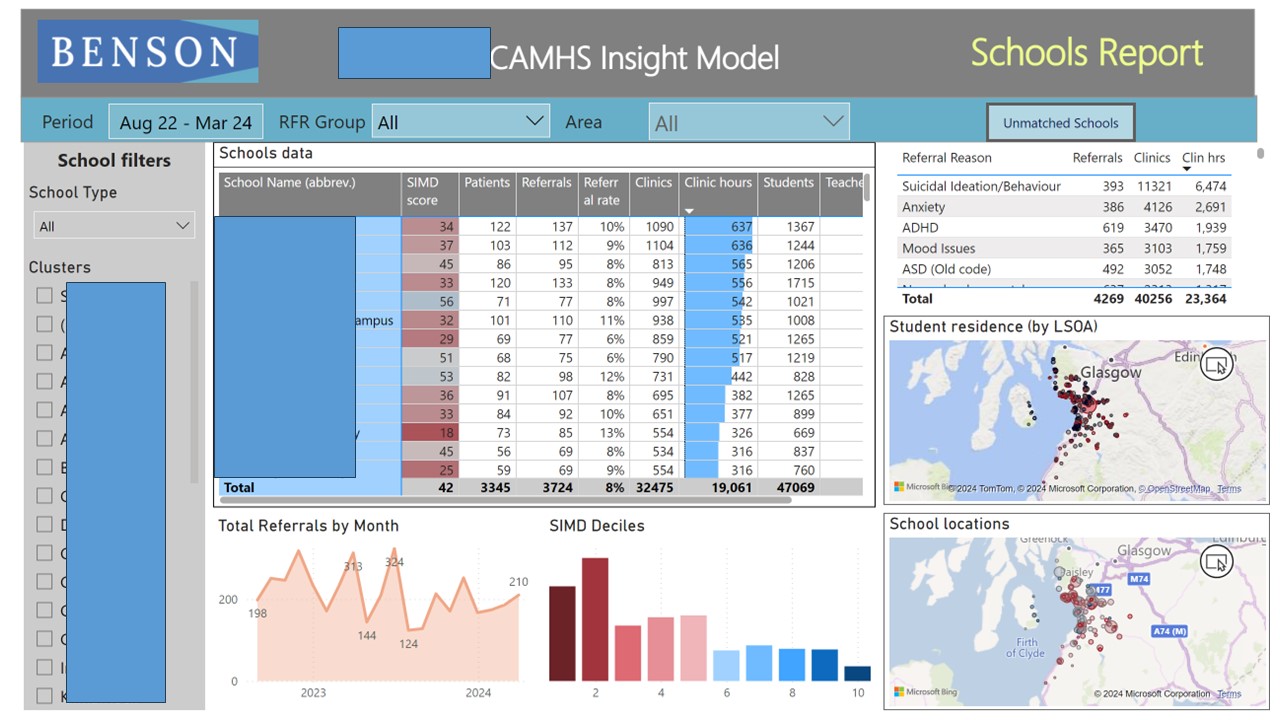
A community mental health / CAMHS service was experiencing long waiting times, increasing referrals and pressure to meet access targets. However, there was limited understanding of pathway flow, capacity constraints and where bottlenecks were occurring.
The Challenge
Lack of visibility across pathways, unclear drivers of waiting lists, and difficulty linking demand to workforce capacity.
Our Approach
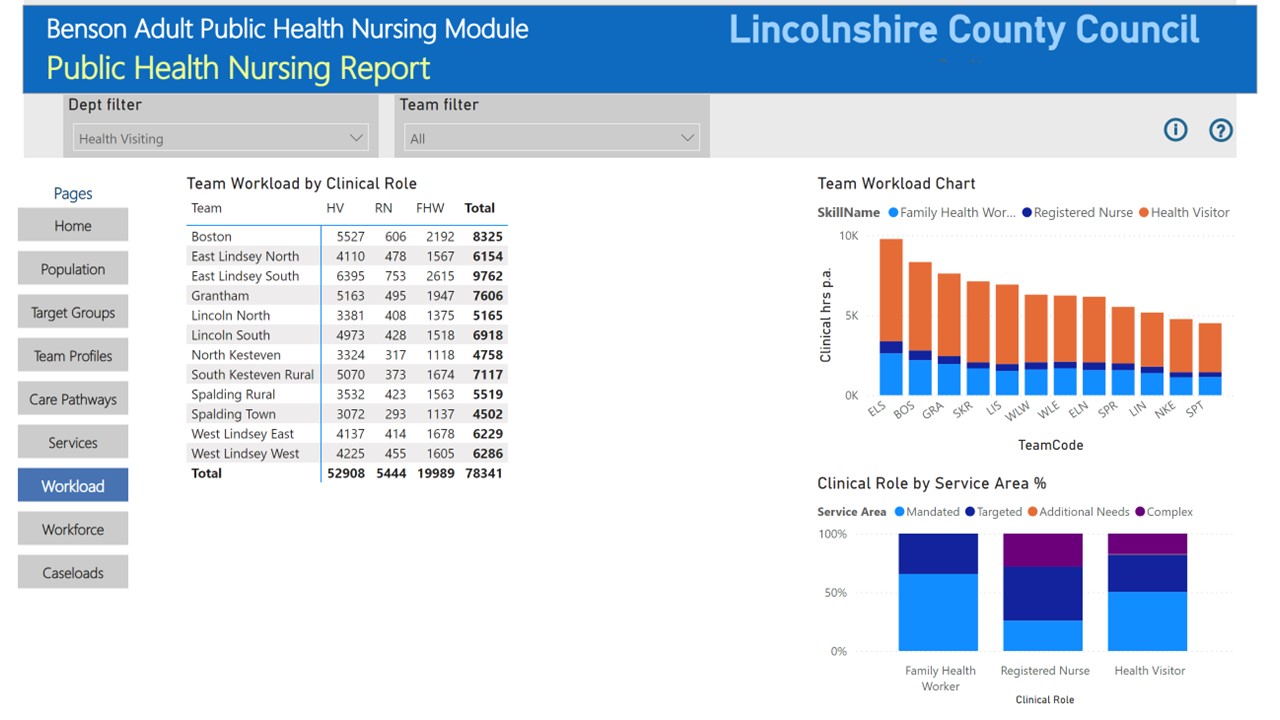
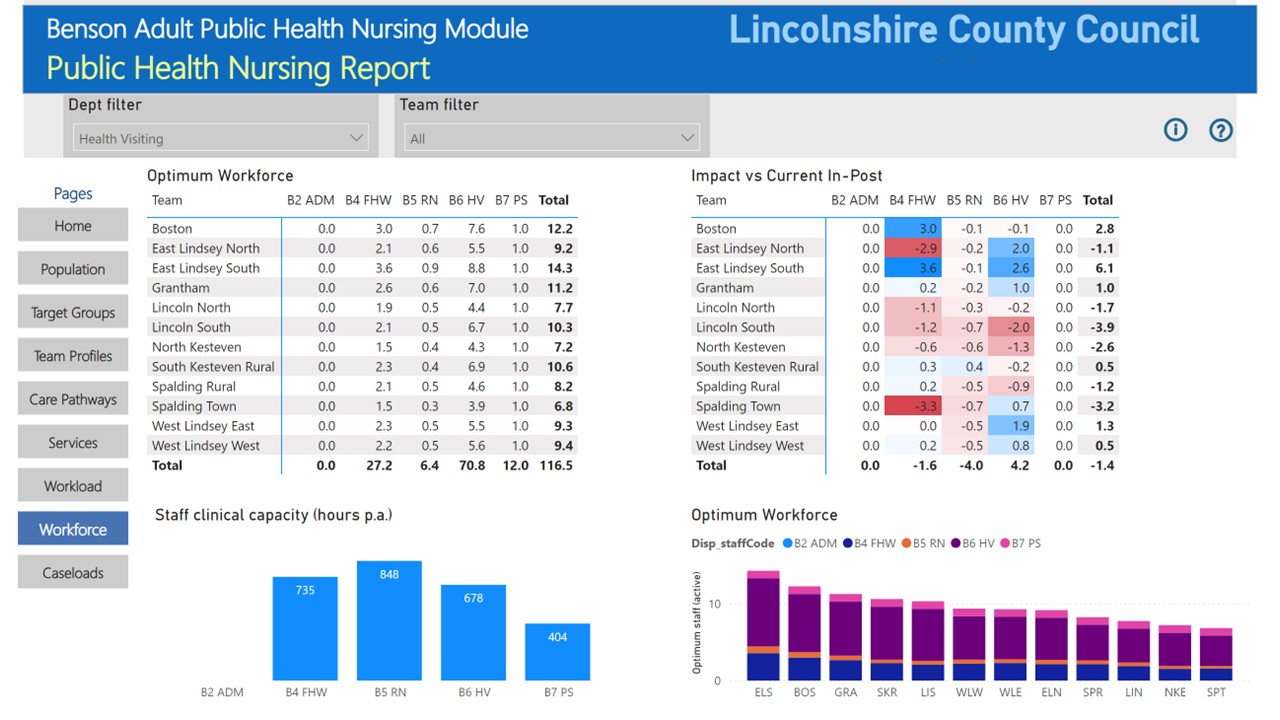
Benson mapped referral pathways, analysed activity and modelled demand against capacity to identify bottlenecks and improvement opportunities.
What We Did
1. Pathway Mapping
Mapped referral-to-treatment pathways and activity flows.
2. Waiting List Analysis
Segmented waiting lists to identify drivers of backlog.
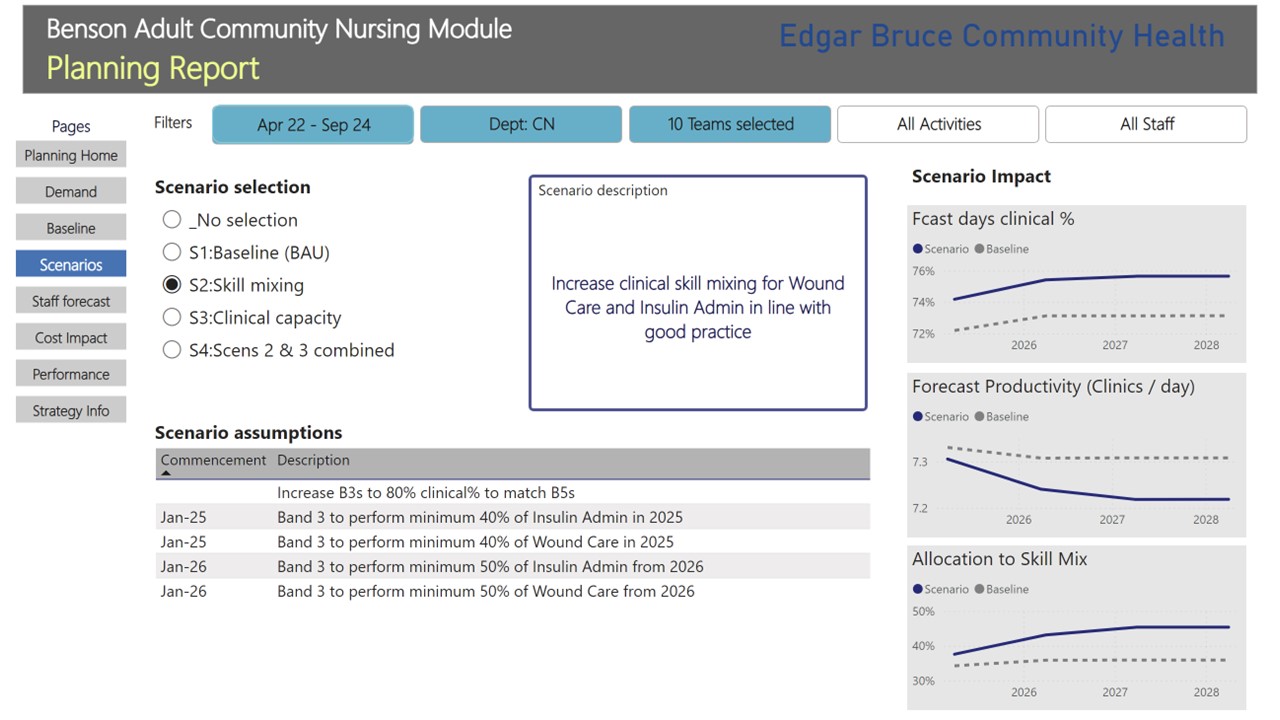
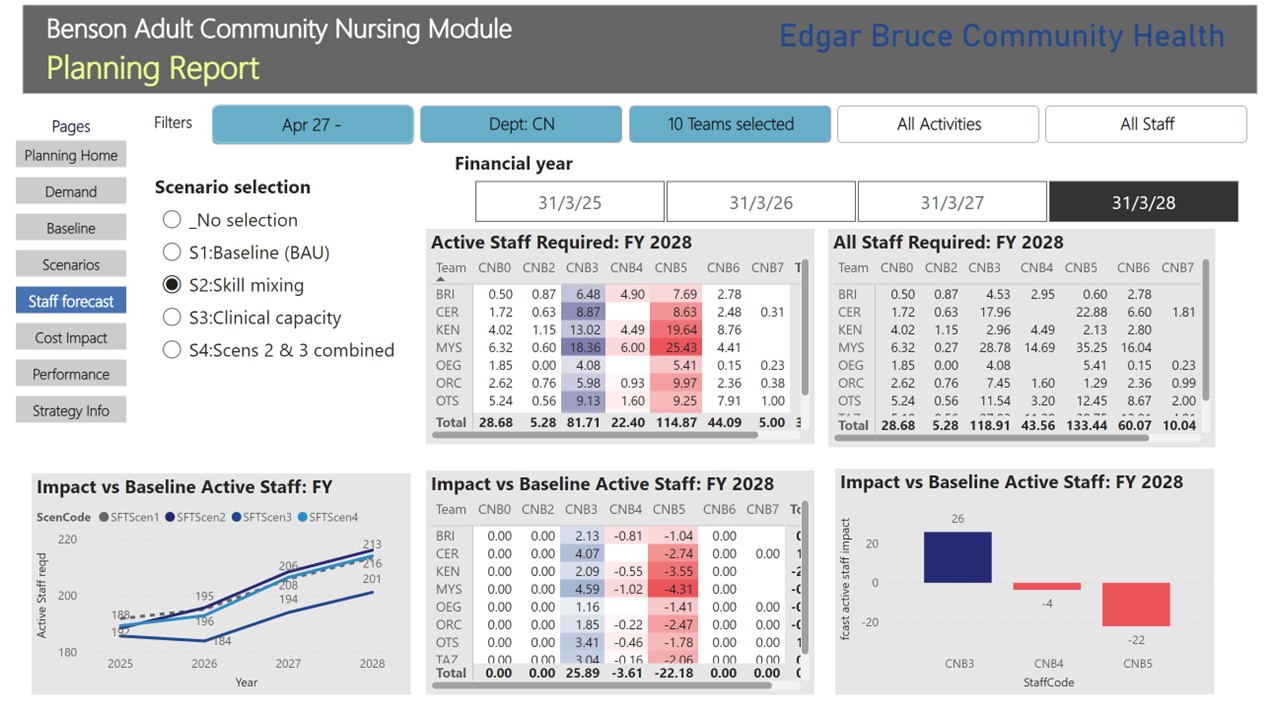
3. Capacity Modelling
Modelled workforce and activity to test improvement scenarios.
Outcomes
- Reduced waiting list growth trajectory
- Clear identification of pathway bottlenecks
- Improved flow through services
- Evidence-based case for investment and redesign
Apply this approach to your service
Move from reactive backlog management to structured, sustainable improvement.
Related Solution
Planning & Sustainability
Design services that are operationally and financially sustainable.
View Solution →Gallery