Building a financially sustainable and safe Public Health Nursing model
Lincolnshire County Council
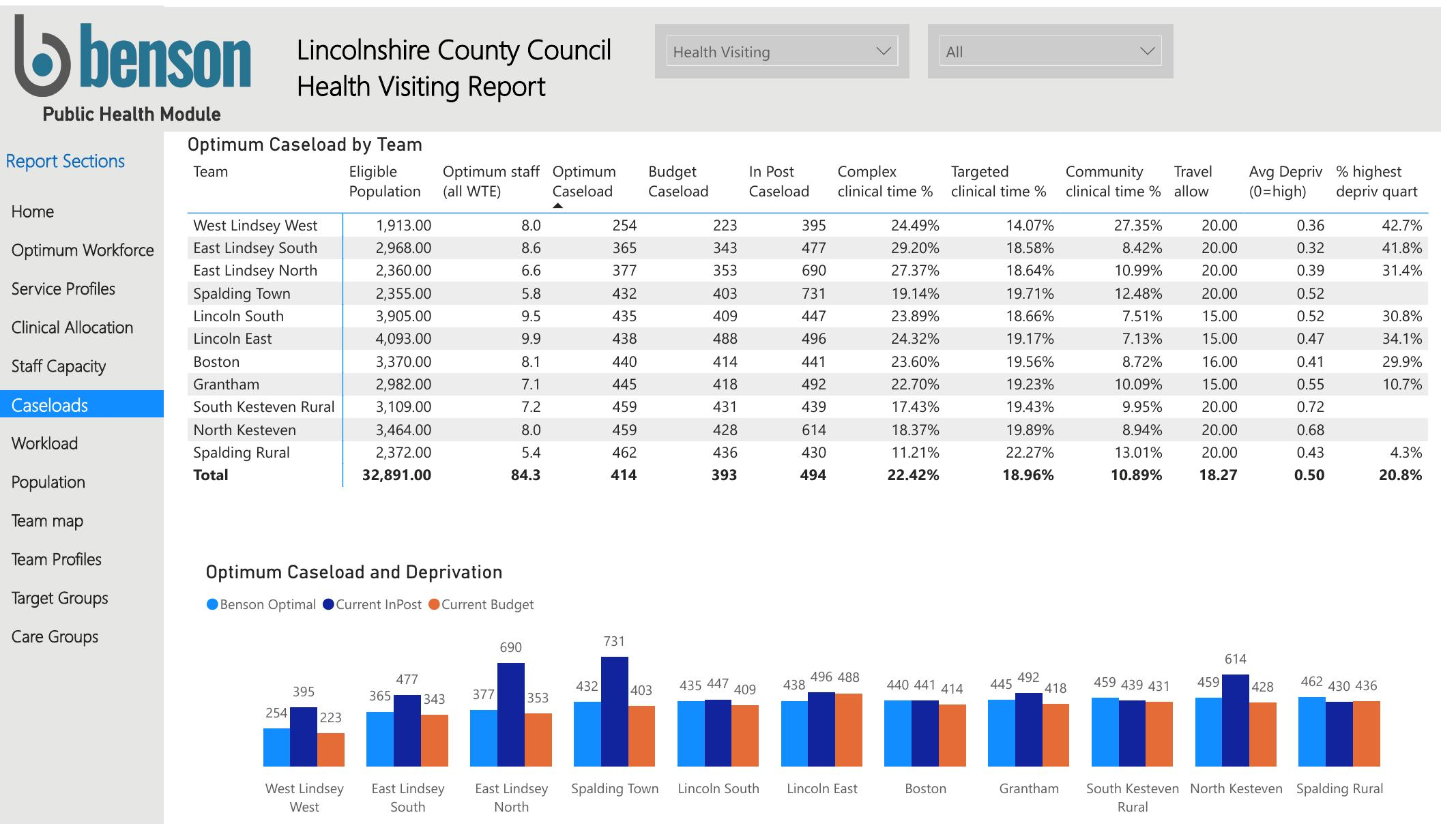
Over seven years of work, Lincolnshire needed to maintain a safe and equitable Health Visiting and Children & Young People's Nursing workforce while responding to local complexity, geography and increasing financial pressure. Simple caseload ratios could not reflect deprivation, safeguarding requirements or differences in travel.
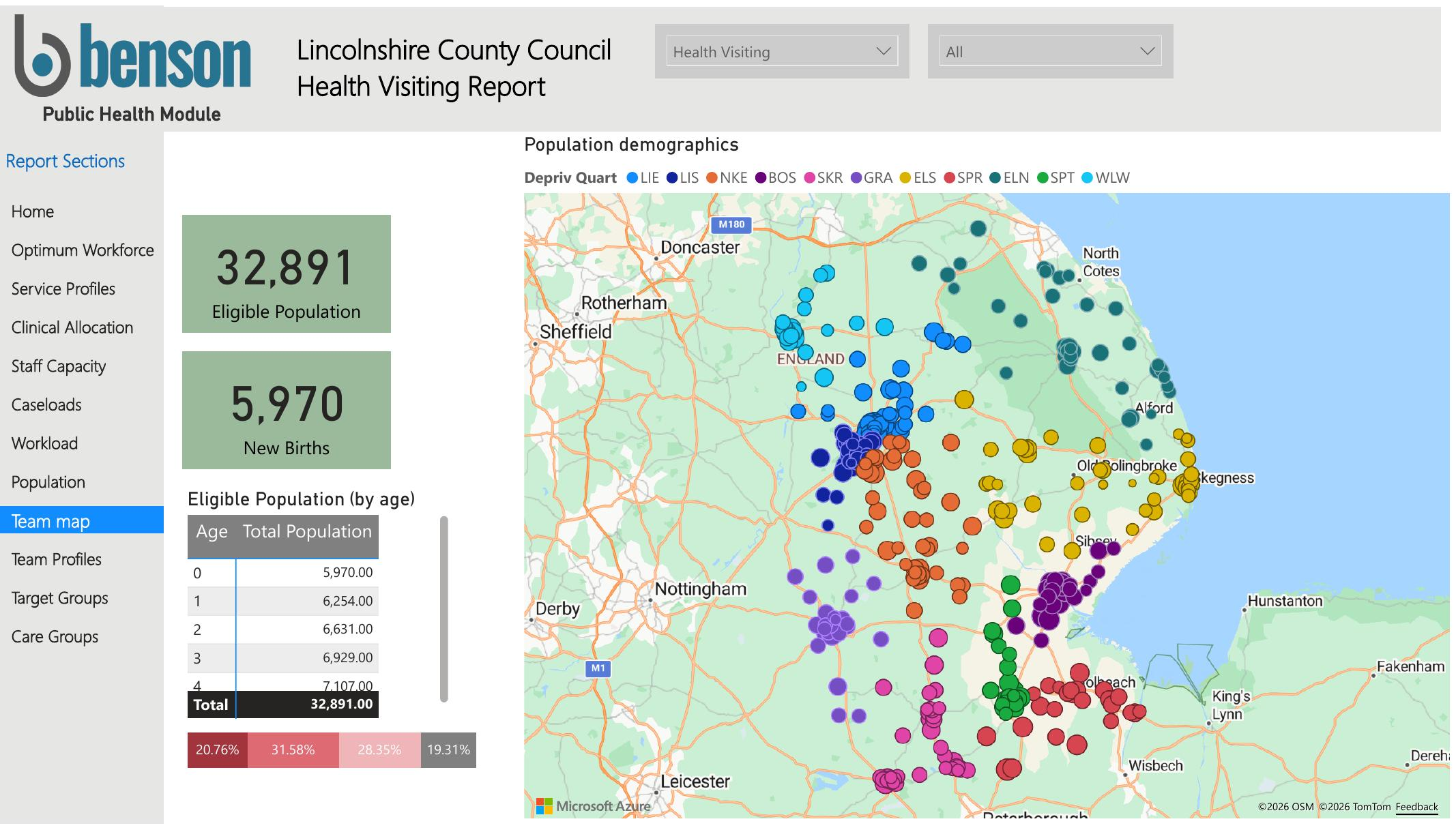
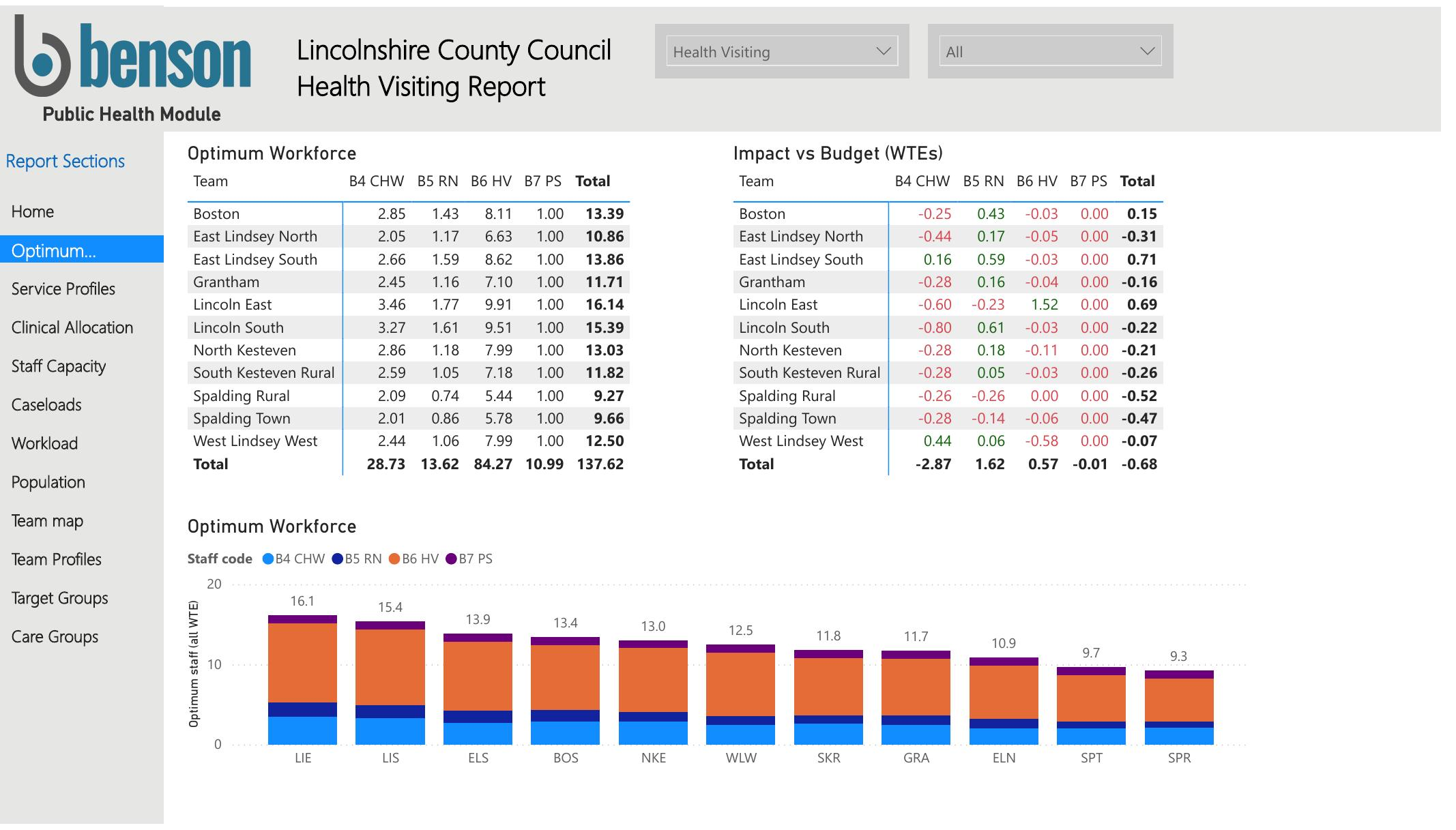
Benson linked population need, births, deprivation, safeguarding, universal and targeted contacts, workforce roles, clinical capacity, local geography and cost. Team workload and workforce requirements can therefore reflect the population actually served rather than applying one uniform caseload assumption.
The model supports optimum workforce by team and role, complexity-adjusted caseloads, travel allowances, workload, population geography and service profiles. It can also test changes to the delivery model, including virtual, clinic, home and hybrid contacts.
- Safer workforce requirements sensitised to local complexity.
- More realistic travel allowances and caseload comparisons.
- Scenario testing before budget reductions or service changes are implemented.
- Better evidence for commissioner-provider conversations about the impact of funding changes.
- Ability to redesign individual contacts and test virtual or hybrid delivery.
The model provides an ongoing basis for balancing population need, workload, workforce capacity, service design and available funding rather than treating financial sustainability as a standalone budget exercise.
Examples from the work.